
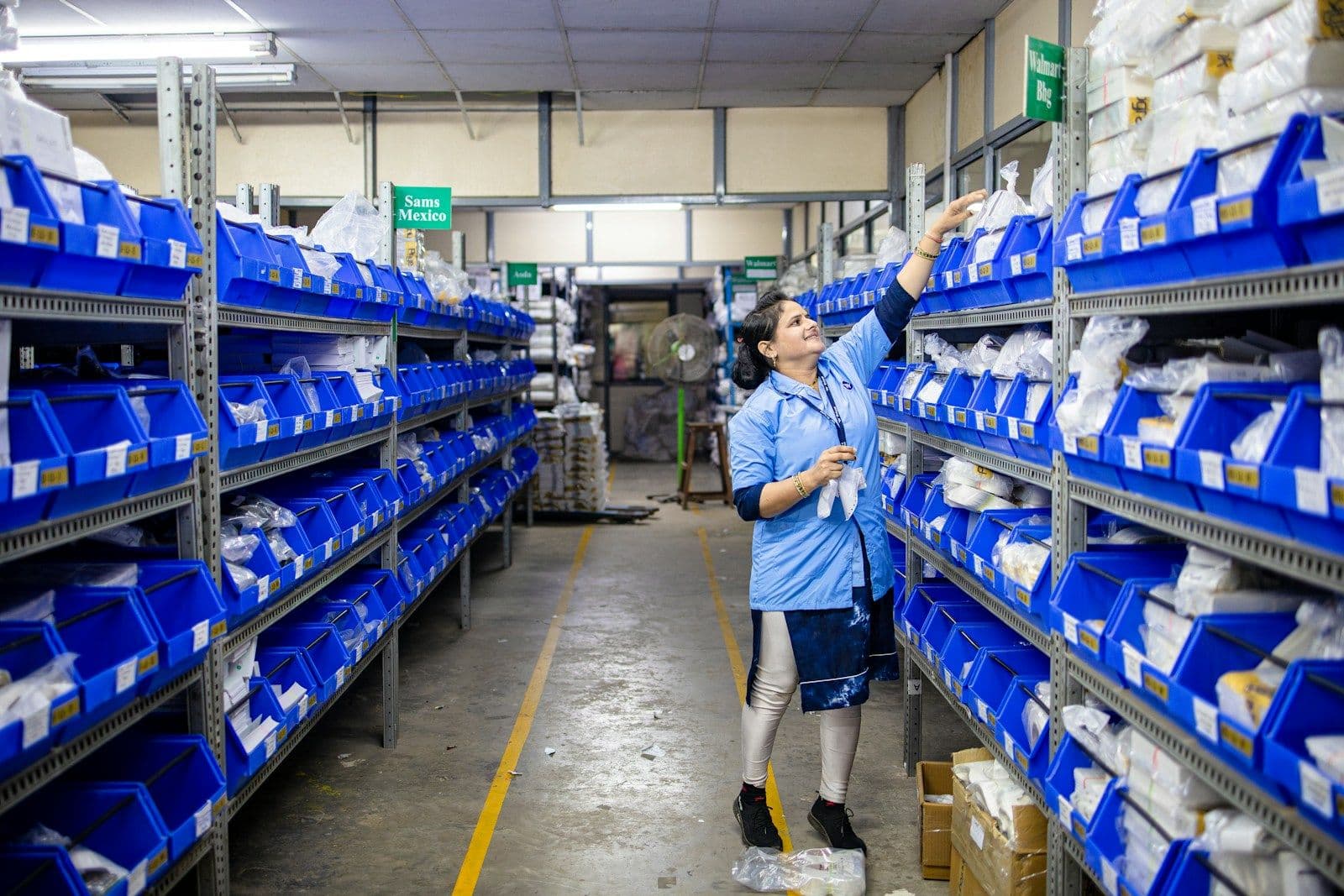
Regular fulfilment is about the products you sell. Technical fulfilment is about everything needed to keep those products working: spare parts, accessories, consumables and service kits. It's the logistics behind your service department.
Who is technical fulfilment for?
For companies that sell appliances or machines and then maintain or repair them. Think of:
- manufacturers and importers of heat pumps, boilers and air conditioners;
- brands of bikes, e-bikes and e-scooters;
- suppliers of professional kitchen and catering equipment;
- producers of machines and installations with a service department;
- brands of household appliances and electronics with their own repair network.
Why spare parts are different
A warehouse for finished products works with relatively few items in large quantities. A spare parts warehouse is the opposite: thousands of different items, often small, often in small quantities, and some ordered only a few times a year. Yet every part has to be found immediately when a technician asks for it.
- Many SKUs: items look alike and have almost identical numbers.
- Versions and serial numbers: the right part depends on the model and year of manufacture.
- Urgency: a customer without heating or a machine at a standstill can't wait.
- Returns: defective parts come back for warranty, repair or analysis.
What a technical fulfilment partner does
- Storage per location: small items in bins and on shelves, large parts on pallets. Every item has a fixed location.
- Fast delivery: orders to technicians, dealers and end customers, with priority for urgent orders.
- Service kits: sets with everything needed for a specific repair or maintenance job.
- Returns and warranty: registering every returned part, with reason, photo and serial number, and forwarding it to the supplier or for repair.
- Reporting: which parts move fast, which sit still and what needs reordering.
What does it deliver?
The biggest gain isn't in the warehouse, but with your customers. When a technician has the right part on time, the repair is done in one visit. That means fewer second visits, more jobs per day and happier customers. Why it often goes wrong is explained in why technicians wait for spare parts.
When should you outsource it?
Outsourcing makes sense when your spare parts take up a lot of space and time, but aren't your core business. Or when your warehouse is set up for machines on pallets, and the small parts fall through the cracks. How Sendwit approaches technical fulfilment is explained on our page about technical fulfilment.