
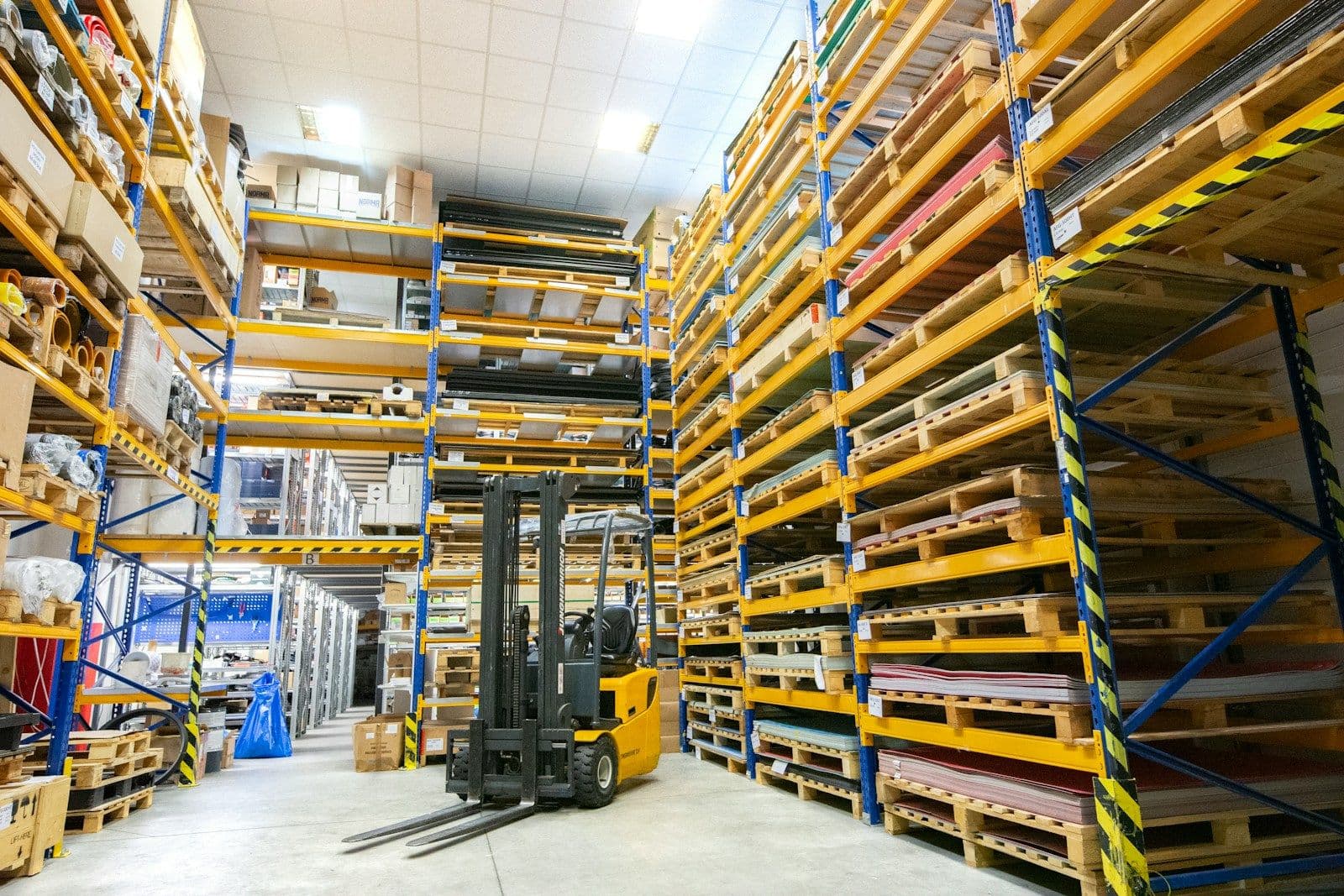
For a long time, an own warehouse was a sign of success: you grow, so you build or rent more space, buy racking and a forklift and hire warehouse staff. Today you increasingly see the opposite. Companies sell their warehouse, end the lease or let a building empty out, and outsource storage and shipping to a fulfilment partner. Why?
1. A warehouse ties up a lot of capital
A building, racking, forklifts, scanners, a warehouse system: that's money locked up in bricks and equipment instead of in your product, your brand or your sales. Selling the warehouse frees up that capital for what really makes your business grow. Some companies sell the building and lease it back temporarily until the move is complete.
2. Fixed costs become variable costs
An own warehouse costs the same every month, whether you sell a lot or a little: rent or depreciation, energy, insurance, maintenance and staff. With a fulfilment partner you pay per pallet or shelf location, per order and per return. Sell less in a quiet month, and you pay less too. That makes your costs more predictable and your business more agile.
3. Finding and keeping staff is hard
Good warehouse staff are scarce. For an SME with one small warehouse, every illness, holiday or resignation is an immediate problem: orders pile up or the owner steps in. A fulfilment partner has a team that runs every day and covers absences, so you don't have to lose sleep over it.
4. Peaks and troughs are hard to absorb
Your warehouse has to be big enough for your busiest weeks, but stands half empty the rest of the year. Black Friday, the holiday season, a new listing with a retailer or a successful campaign: suddenly you have twice as many orders. With a partner you scale up and back down, without finding extra space or temporary workers.
5. Logistics is getting more complex
It used to be pallets to a handful of wholesalers. Today many brands sell through their webshop, marketplaces, independent shops and large retailers at the same time. Each channel has its own requirements: parcels with track and trace, boxes with a delivery note, pallets with GS1 labels, an EDI despatch advice and a booked time slot. That takes integrations, software and experience that an SME doesn't easily build in-house. Read more in supplying supermarkets and retailers.
6. Investing in systems and automation only pays off at scale
A good warehouse system, scanners and integrations with your webshop, ERP and carriers cost a lot, and need maintaining. A fulfilment partner spreads that investment across all its clients. You get access to a portal, reports and integrations without having to buy or build them yourself.
7. Better shipping rates and more choice
As a small shipper you often pay carriers' standard rates. A fulfilment partner ships much larger volumes and therefore usually has better rates and more choice: several parcel carriers, pallet transport and shipping across Europe.
8. Focus on what sets you apart
Your customers choose you for your product, your service or your brand, not for the way you stack boxes. Every hour you or your team spend in the warehouse isn't spent on product development, sales or customer contact. For many owners, that is ultimately the main reason: they want to run a business again instead of managing logistics.
When does an own warehouse still make sense?
Outsourcing isn't the best choice for everyone. An own warehouse can still make sense if:
- you have very large and stable volumes all year round;
- your products need very specific handling, such as refrigeration, dangerous goods or very large items;
- storage and production need to happen in the same place, for example for made-to-order products;
- logistics itself is your competitive edge.
In doubt? Make an honest comparison: put all the costs of your own warehouse (space, staff, equipment, software, insurance and your own time) next to a quote based on your own volumes. How to compare fulfilment quotes is explained in what does fulfilment cost?
How do you make the switch?
- 1Map your volumes: orders per month, number of items, sizes and your channels (parcels, shops, retail, parts).
- 2Request quotes based on your own figures, including surcharges, integrations and returns.
- 3Plan the move in a quiet period, not just before the holidays or a big delivery to a retailer.
- 4Have the integrations tested before your stock moves, so orders come in automatically from day one.
- 5Monitor the first weeks closely: is the stock correct and do orders leave on time?
Sendwit takes over storage and shipping for Belgian SMEs: parcels to consumers, boxes to shops, pallets to retailers and parts to technicians, from one stock. You can cancel monthly and have one fixed contact person. Read our commitments or request a price proposal.