
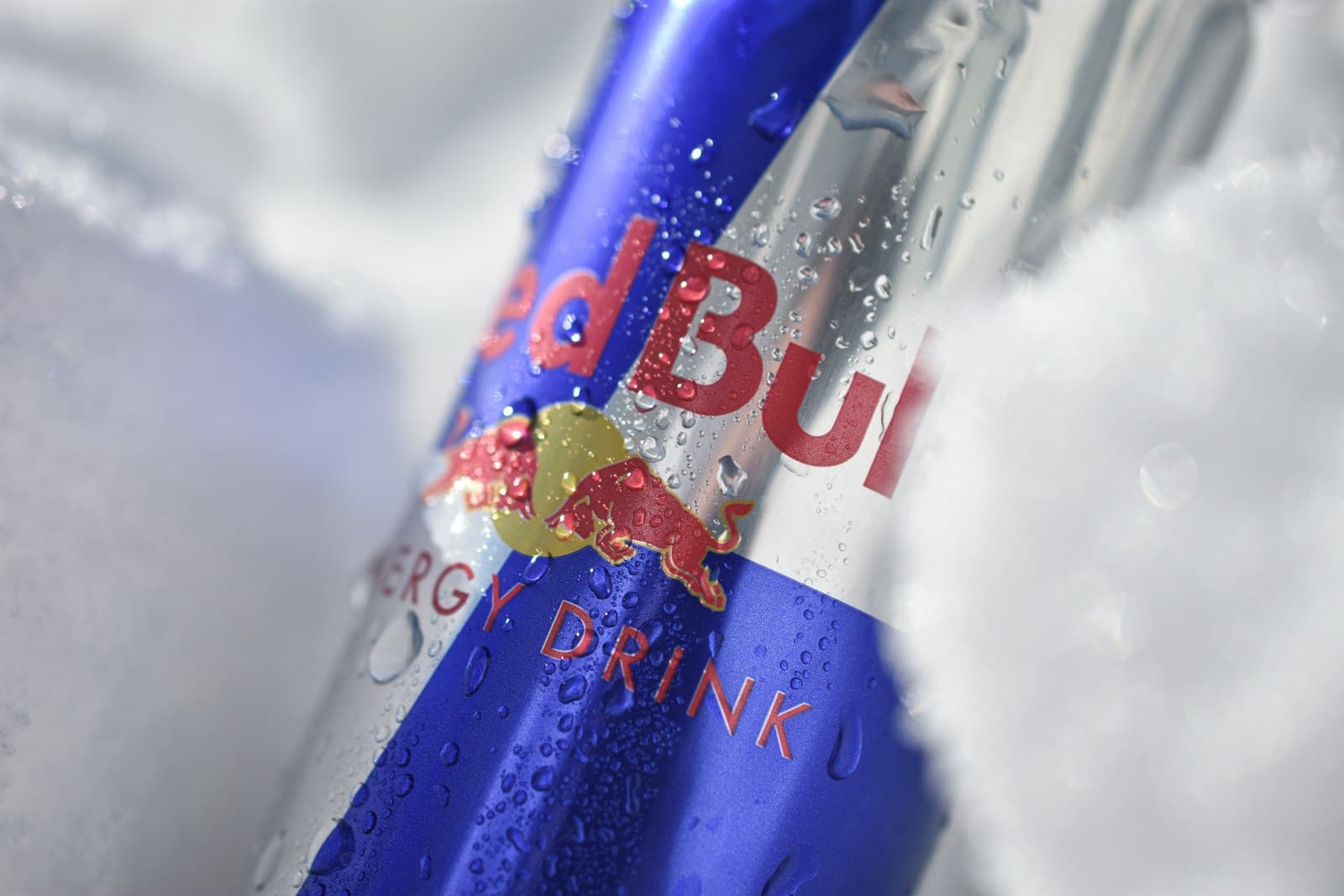
You often read it on LinkedIn: "Red Bull makes nothing itself. It outsources everything except marketing." A great story, but is it true? We looked into it. The short answer: mostly, but not entirely. And it's exactly that nuance that holds the lesson for every growing brand.
How big is Red Bull?
In 2025 Red Bull sold 13.969 billion cans worldwide, 10.2% more than the year before. Revenue rose to €12.2 billion and the brand is sold in 178 countries. Those are the figures Red Bull publishes itself. Yet the company has no factory of its own in Austria where the drink is made and canned.
What's true: production and part of the logistics are outsourced
- Production: the drink is made and canned by Rauch, a family-owned fruit juice company from Vorarlberg. Rauch fills in Austria and Switzerland and is the world's largest bottler of Red Bull.
- Cans: these come from specialist packaging manufacturers such as Ball.
- Storage and distribution: in several countries Red Bull works with logistics partners. Since 2023, for example, GXO has run a 10,000 m² warehouse for Red Bull in Italy, including returns, value-added services and local delivery to shops and wholesalers.
In the United States, too, Red Bull didn't build a factory on its own. The canning plant in Glendale, Arizona, is a joint venture with Rauch and Ball. Red Bull co-invests, but leaves production to those who do it best.
What's not true: Red Bull does more than marketing
"Only marketing" is an oversimplification. At the end of 2025 Red Bull had almost 22,000 employees, and they don't all sit in a marketing department. The company deliberately keeps a few things in its own hands:
- The recipe, the quality and the brand. Rauch fills the cans, but Red Bull decides what goes in them and what they look like.
- Sales and distribution in key markets. In the United States, the United Kingdom and Germany, among others, Red Bull has its own sales teams and distribution companies. That way it keeps control over pricing, shelf space and fridges in the shop.
- Media and sport. Red Bull Media House, its own events and sports teams such as in Formula 1 and football. That's marketing, but on a scale you'd sooner expect from a media company.
A better summary
Red Bull doesn't outsource "everything but marketing". It does what makes the brand itself (the product, the experience and the relationship with the shop) and outsources what specialists do better and cheaper (filling, making cans, storage and transport). The money that isn't tied up in factories, warehouses and trucks goes into growth.
What can you learn from this as a brand?
- 1Know what sets you apart. Customers don't buy Red Bull because the can was filled in its own factory. Do your customers buy your product because of what your warehouse looks like? Probably not.
- 2Outsourcing isn't giving up control. Red Bull sets the bar for quality and delivery, and lets partners carry it out. Clear agreements, live insight into your stock and regular reporting keep you in the driver's seat.
- 3Keep your capital free. A warehouse of your own with racks, forklifts and staff ties up money you could also put into product, sales or marketing. Read more in why more and more companies are selling their warehouse.
- 4Choose partners for the long term. Rauch has been filling Red Bull since its launch in 1987. A good partner grows with your volumes, your channels and your countries.
- 5You don't need to be as big as Red Bull. Smaller brands benefit the most, because they can least afford to invest in their own space, systems and people.
At Sendwit we take over storage and shipping for your brand: parcels to consumers, boxes to shops and pallets to retailers, all from one stock. You focus on your product and your brand. See how we do it for retail fulfilment and e-commerce fulfilment, or request a quote.